

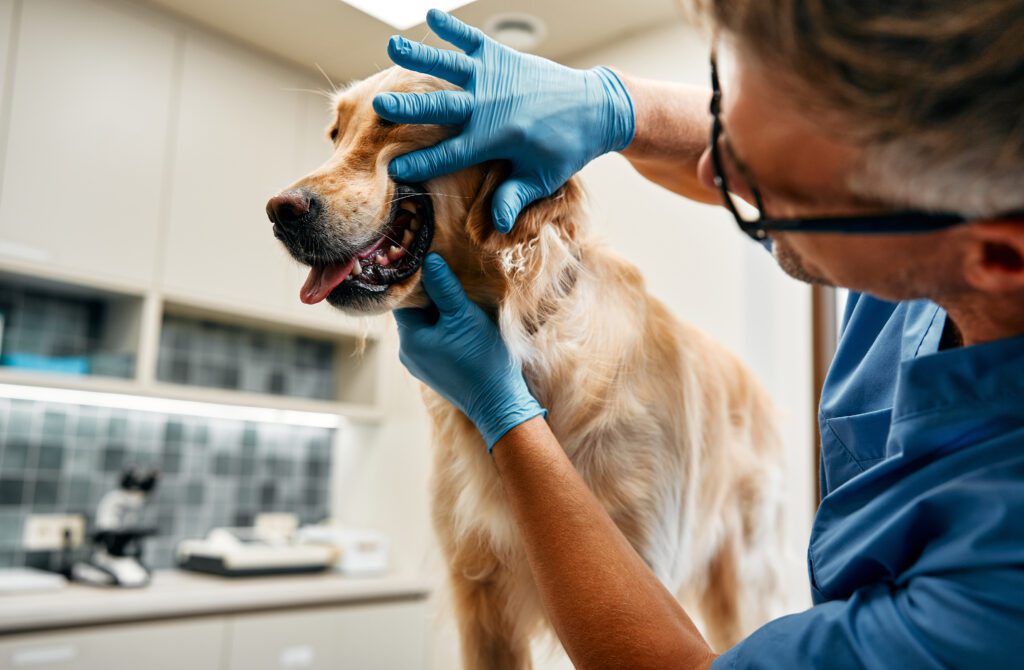
Your dog may not complain about a sore tooth or point out that their gums are bothering them. Instead, dental problems often show up in quieter ways: stronger breath, yellow or brown buildup on the teeth, changes in chewing habits, or simply less enthusiasm at mealtime. That is why dog teeth cleaning should be considered part of your pet’s ongoing health care, not simply something to think about when their breath becomes unpleasant.
At Lakecity Animal Hospital, dental care is part of the range of veterinary services available to dogs and cats in West Kelowna. Regular oral assessments can help identify changes in your dog’s teeth and gums and determine when professional dental care may be appropriate. So, when does your dog actually need a dental cleaning? Here are the signs to watch for, what professional cleaning involves, and what you can do at home to support a healthier mouth.
Why Dog Teeth Cleaning Is an Important Part of Long-Term Health
A dog’s mouth is constantly exposed to food particles and bacteria. Over time, plaque can accumulate on the teeth. If it is not removed, it can harden into tartar and contribute to irritation and disease around the gums. This is where regular dog teeth cleaning becomes important.
Dental problems are not always obvious from looking at the front of your dog’s mouth. Some changes occur around or below the gumline, which means teeth that appear relatively normal at a glance may still require veterinary attention. Professional teeth cleaning for dogs is designed to do more than make the visible surface of the teeth look better. Veterinary dental care allows the mouth to be examined more thoroughly and areas beneath the gumline to be addressed when required.
Maintaining dental health can also help preserve your dog’s comfort when eating, chewing, playing, and going about everyday life. There is no single schedule that is right for every dog. Breed, age, oral anatomy, diet, existing dental health, and home care can all influence how quickly plaque and tartar develop. A vet can assess your dog’s mouth during regular examinations and recommend dog teeth cleaning based on what they actually see rather than relying on a one-size-fits-all timeline.
Signs It May Be Time for Professional Dog Teeth Cleaning
Dogs can be surprisingly good at continuing to eat and behave normally even when something in their mouth is uncomfortable. That makes it important for owners to recognize smaller changes.
Some common signs that may warrant a dental examination include:
- Visible yellow or brown tartar building up along the teeth or gumline.
- Red, irritated, swollen, or bleeding gums.
- Persistent dog bad breath that is noticeably stronger than usual.
- Difficulty chewing, dropping food, or favouring one side of the mouth.
- Reduced interest in hard treats or toys your dog previously enjoyed.
- Pawing or rubbing at the face and mouth.
- Loose, damaged, or discoloured teeth.
- Changes in appetite or eating behaviour.
Not every dog showing one of these symptoms will automatically require the same dental treatment. An examination is the best way to determine what is happening.
If you have been searching for dog teeth cleaning near me because you have noticed tartar, gum changes, or unusual behaviour, consider starting with a veterinary examination rather than waiting for symptoms to become more pronounced. A veterinarian can assess your dog’s individual dental health and explain whether professional dog teeth cleaning is recommended.
That can be particularly valuable for older dogs or dogs that have not had their dental health assessed recently. However, dental issues are not limited to senior pets. Younger dogs can develop oral problems as well, which is why teeth and gums should be checked throughout a dog’s life.
Dog Bad Breath Can Be More Than Just “Dog Breath”
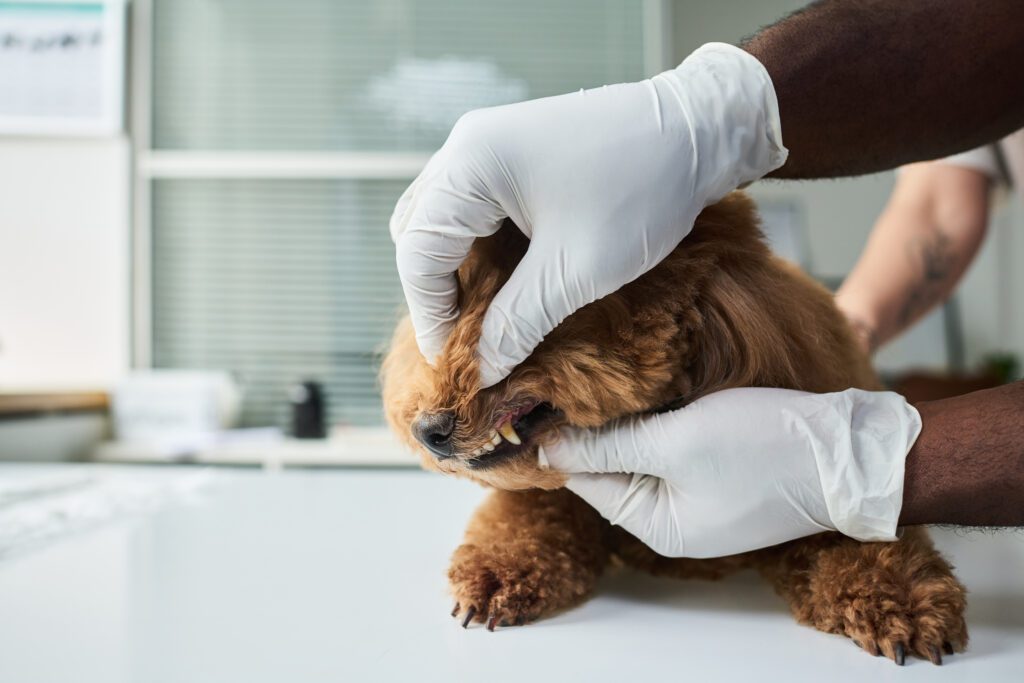
A little dog breath after dinner is one thing. A persistent, unpleasant smell coming from your dog’s mouth deserves more attention. Bad breath is one of the most common reasons pet owners begin looking more closely at their dog’s dental health. While occasional odour can be related to something your dog ate, ongoing or worsening dog breath odour may accompany plaque, tartar, gum inflammation, infection, or other oral health concerns. Instead of relying exclusively on breath-freshening products to cover the smell, look at the bigger picture.
Check for:
- Changes in gum colour
- Heavy tartar around the gumline
- Broken or loose teeth
- Excessive drooling
- Reluctance to chew
- Blood around the mouth or on toys
- Facial swelling
A veterinary wellness examination can help determine whether the odour is associated with dental disease or another health concern. In some cases, professional dog teeth cleaning may be recommended to address buildup and allow the veterinary team to examine the mouth more completely. In other words, fresh breath is nice, but the real goal is a comfortable, healthy mouth.
What Happens During a Dog Dental Cleaning at a West Kelowna Vet?
If your veterinarian recommends a professional cleaning, it helps to understand how veterinary dental care differs from simply brushing your dog’s teeth at home. A proper veterinary dog teeth cleaning is intended to evaluate and clean areas that cannot be safely or effectively addressed with a toothbrush alone.
Professional veterinary dental procedures are generally performed under anesthesia. This allows the veterinary team to examine the mouth thoroughly, clean above and below the gumline, and perform necessary diagnostics or treatment without causing unnecessary stress or movement.
Depending on your dog’s needs, a dental visit may involve:
An oral health assessment
The teeth, gums, and surrounding structures are evaluated for signs of dental disease or damage.
Scaling
Plaque and hardened tartar are removed from the teeth, including areas around and beneath the gumline.
Polishing
After scaling, the tooth surfaces can be polished to create a smoother surface.
Dental imaging or further assessment when indicated
Some problems are hidden beneath the gumline and cannot be identified by looking at the visible portion of a tooth alone.
Treatment recommendations
If damaged, loose, infected, or otherwise unhealthy teeth are identified, your veterinarian can discuss the appropriate next steps.
If you are comparing West Kelowna vet clinics or searching for a vet in West Kelowna for your dog’s dental care, ask what the dental assessment includes and what will happen before, during, and after the procedure.
Why We Recommend Dental Procedures Under Anesthesia
Some pet owners are interested in non-sedated teeth cleanings. Avoiding anesthesia can sound simpler, especially when a dog appears calm and cooperative. However, a non-sedated cleaning is not the same as a complete veterinary dental procedure. At Lakecity Animal Hospital, we recommend performing professional dog teeth cleaning under anesthesia because it allows the veterinary team to properly examine and clean the entire mouth, including areas that cannot be safely reached while a dog is awake. A large part of dental disease develops below the gumline. This is one of the biggest limitations of non-sedated teeth cleaning. While visible tartar may be removed from the surface of the teeth, the areas beneath the gums cannot be thoroughly cleaned or evaluated in an awake dog.
Anesthesia allows us to:
- Clean above and below the gumline where plaque and tartar can contribute to periodontal disease.
- Carefully examine each tooth and the surrounding gums without causing unnecessary stress or discomfort.
- Take dental X-rays when needed to identify problems below the surface, including issues involving tooth roots and surrounding bone.
- Safely assess loose, damaged, fractured, or painful teeth.
- Perform necessary treatment during the same procedure when appropriate.
- Protect the airway from water, debris, and bacteria during the cleaning process.
Another important consideration is movement. Even a very well-behaved dog may suddenly move when an instrument touches a sensitive tooth or painful area. Dental instruments are sharp and are used around delicate gums, teeth, and oral tissues, so keeping your pet still is important for both comfort and safety. Non-sedated teeth cleanings can also create the appearance of cleaner teeth without addressing disease beneath the gumline. Removing visible tartar may improve how the teeth look, but appearance alone does not tell us what is happening below the surface.This is why professional dog teeth cleaning is about much more than removing staining or freshening your dog’s breath. The goal is to properly evaluate oral health, identify hidden problems, clean the areas where dental disease develops, and make informed treatment decisions.
Before anesthesia, your veterinarian will assess your dog’s health and may recommend pre-anesthetic testing based on factors such as age, medical history, and individual needs. The dental plan can then be tailored to your pet. If you are comparing professional dog teeth cleaning with a non-sedated cleaning, ask what areas of the mouth will actually be examined and cleaned. A complete veterinary dental procedure under anesthesia gives the veterinary team the access needed to provide a much more thorough assessment of your dog’s teeth and gums.
Keeping Your Dog’s Teeth Cleaner Between Veterinary Visits
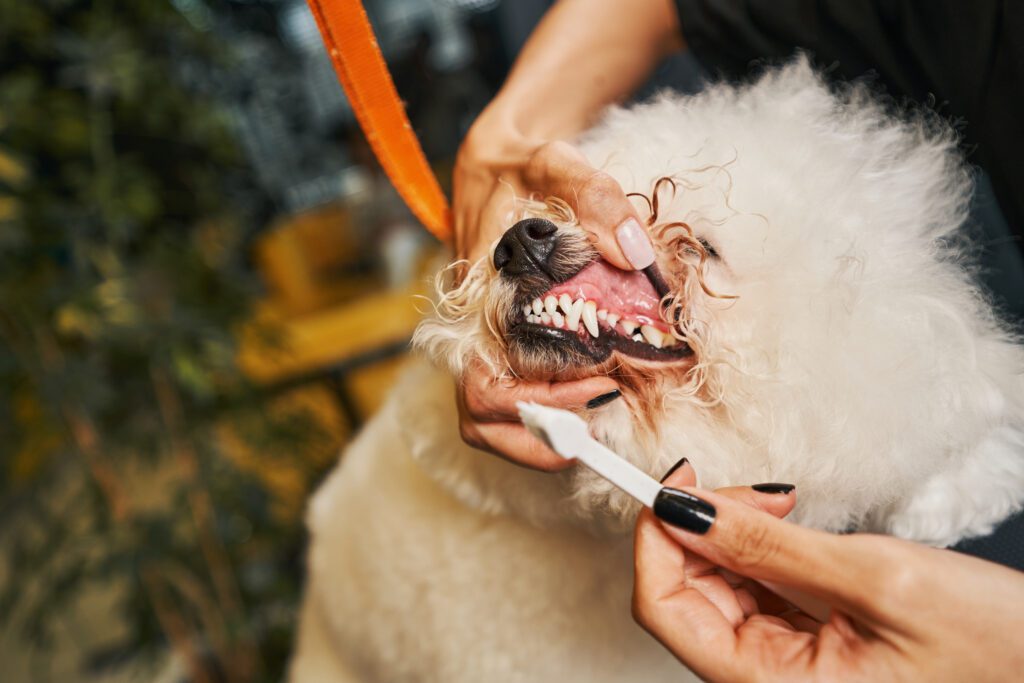
Professional dog teeth cleaning is only one part of maintaining dental health. What happens between veterinary appointments matters too. For pet owners wondering how to clean their dogs’ teeth, brushing is one of the most useful habits to establish. Use toothpaste made specifically for dogs rather than human toothpaste, and introduce brushing gradually so your dog has time to get comfortable with the process.
Start with a simple routine
If your dog is not accustomed to having their mouth handled, do not begin by attempting to scrub every tooth.
Instead:
- Let your dog become comfortable with you gently touching their muzzle and lips.
- Introduce a pet toothbrush or finger brush gradually.
- Use toothpaste formulated specifically for dogs.
- Begin with short sessions and focus on creating a positive experience.
- Gradually work toward brushing the outer surfaces of the teeth regularly.
- Patience matters. A short, positive brushing session is often more useful than turning dental care into a struggle that your dog learns to avoid.
Veterinary-approved dental chews or other dental products may also complement brushing for some dogs. Your veterinarian can help you choose options appropriate for your dog’s age, size, chewing habits, and dental condition.
Home care, however, does not replace professional dog teeth cleaning when tartar has already hardened or disease is developing beneath the gumline. Think of the two approaches as working together: home care helps manage plaque between appointments, while veterinary dentistry addresses problems that cannot be managed safely at home.
Choosing Dental Care for Your Dog in West Kelowna
Searching online for dog dentist cleaning, dog teeth cleaning near me, or a vet West Kelowna pet owners can turn to may give you plenty of options. What matters most is finding veterinary care that looks at your dog’s dental health as part of their overall wellbeing. Lakecity Animal Hospital provides dental care alongside wellness examinations, vaccinations, surgery, diagnostics, and other veterinary services for pets in West Kelowna.
Whether your dog already has noticeable tartar, you are concerned about dog breath odour, or you simply want to know if their teeth look healthy, an examination can give you a clearer answer. The best time to think about dog teeth cleaning is not necessarily when dental problems have become obvious. Regular checks, consistent home care, and timely professional treatment can make it easier to stay ahead of changes in your dog’s mouth. If you’re looking for a West Kelowna animal hospital to assess your dog’s dental health, contact Lakecity Animal Hospital to book an appointment. The veterinary team can examine your dog’s teeth and gums, discuss any concerns, and determine whether dog teeth cleaning should be part of their care plan.